CO alarm sounding or gas smell: do this first
- Move everyone, pets included, out of the house into fresh air.
- Call 911 from outside. A CO alarm that keeps sounding is not a nuisance.
- For a rotten-egg gas smell, leave and call 911 or the gas utility, National Grid, from outside. Do not flip switches.
- Do not reenter, relight any pilot or run the appliance until a licensed professional clears it.
What A Flue Is Supposed To Do
A gas water heater or boiler burns fuel and produces carbon dioxide, water vapor and trace carbon monoxide. The flue, a sealed metal pipe or masonry chimney liner, carries those gases up and outside on warm rising air. If the flue is cracked, disconnected or blocked, the gases spill into the room instead.
Backdrafting is the term for the reverse. Air pressure in a tight house, a clogged chimney or a failed vent fan can pull exhaust back down the flue and out through the draft hood. The result is incomplete combustion and carbon monoxide in your living space.
According to Massachusetts standards, only a plumber licensed by the Board of State Examiners of Plumbers and Gas Fitters may do this kind of work on a heater or boiler.
Six Signs Worth Taking Seriously
Soot or scorch marks
Black streaking above the draft hood, on the burner door or around the vent collar means flame or hot gas is escaping where it should not.
Rust streaks on the vent
Orange stains on a galvanized connector, or white crust at a joint, point to condensation leaking from a seam.
A yellow, floppy flame
A healthy burner flame is mostly blue. Lazy yellow flames suggest poor combustion or poor draft.
Stuffy air, headaches
If symptoms ease when you leave the house, treat it as a possible CO exposure and call 911.
Moisture on the windows
Excess indoor humidity near the appliance can mean combustion moisture is staying in the room.
Chronic alarm chirps
A CO alarm that trips again and again is telling you something. Do not remove the battery.
How Urgent Is Each Sign?
| Sign | What it suggests | Urgency | First action |
|---|---|---|---|
| CO alarm sounds | Exhaust or CO present now | Immediate | Exit, call 911 |
| Gas smell | Gas leak, not exhaust | Immediate | Exit, call 911 or National Grid |
| Soot at the draft hood | Spillage or poor draft | High, same day | Shut the appliance off, then call a licensed plumber |
| Rust at flue joints | Slow leak or moisture | Moderate | Schedule an inspection soon |
| Yellow flame | Combustion problem | High | Turn it off and have it serviced |
| Window condensation near the unit | Venting trouble or humidity | Lower | Book an inspection |
Checks A Homeowner Can Do Safely
Look at the vent pipe from a distance with a flashlight. Look for sagging sections, gaps at joints, a loose collar at the top of the heater and rust stains at the elbows. Check that nothing is stored against or near the unit and the room has air to burn.
Do not tape, caulk or foil-wrap a flue. Never relight a pilot that has gone out repeatedly. Never hold a flame near a vent to test draft, because leaking gas is also possible.
Danvers Factors For Gas Appliance Safety
Gas service in Danvers comes from National Grid, and a gas smell is a call to 911 or the utility from outside the house. We do not print an emergency number here, because the safest move is to leave first and call from a safe spot.
Roughly 43.5 percent of Danvers houses predate 1960, per the Census ACS for 2020 to 2024. Older homes often have masonry chimneys and aged vent connectors, which makes a flue inspection worth doing when a heater is replaced. Danvers heating season also means windows stay shut, so a tight house is more likely to pull exhaust back down.
State rules bar any plumbing work until a permit is issued, and only licensed plumbers can obtain one. You can check any license through the state eLIPSE lookup on mass.gov.
Source type: Census ACS 2020 to 2024 and Massachusetts plumbing permit rules
What An Inspection Looks At
A technician starts with the vent path: draft hood, connector, any horizontal runs and the termination at the roof or wall. Slope matters, since connectors should rise toward the chimney so hot gases keep moving upward.
Then comes a combustion check with an analyzer that reads carbon monoxide at the flue. The same visit looks at the burner, the heat exchanger on a boiler and the combustion air supply. Findings are explained before any repair begins, with the price agreed first.
Who Repairs What
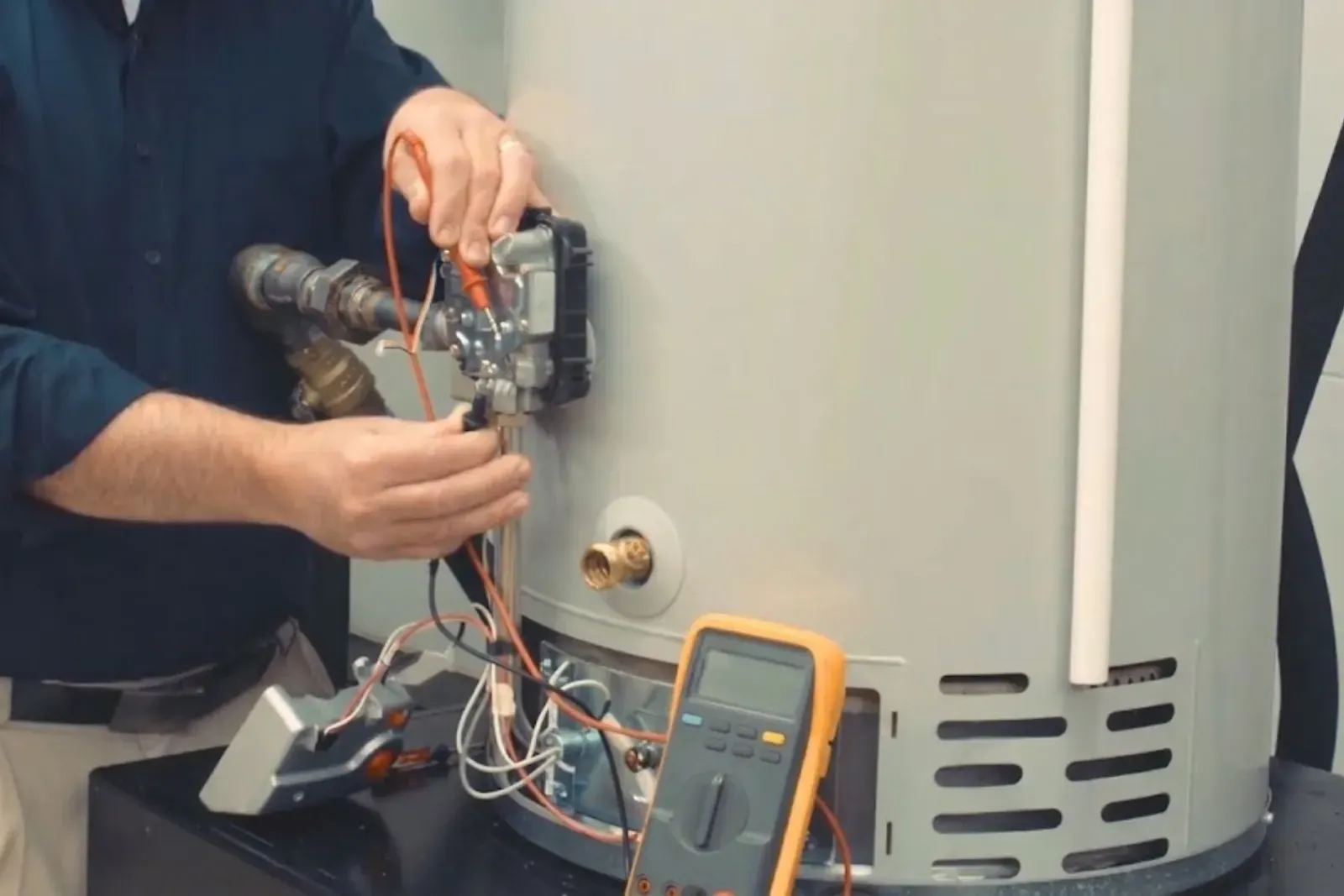
A licensed plumber and gasfitter can inspect the vent, reseat or replace connectors and check combustion. If the heater is the source, our water heater repair service handles gas models, and a failed boiler flue is a job for boiler repair. A sealed combustion boiler needs different vent parts than an atmospheric one, so the model matters.
A chimney liner or masonry repair often comes from a chimney professional, not a plumber. We will tell you where our work stops. We dispatch to Beverly and Middleton as well, so a neighbor with the same symptoms can call the same line.
Keeping The Vent Healthy After A Repair
Once a vent has been repaired, a few habits keep it that way. Keep the area around the heater or boiler clear, since stored paint, cleaners and cardboard do not belong beside a burner. Leave the combustion air openings unblocked, and never close off a vent grille to save heat.
Test your carbon monoxide alarms on the schedule printed on the unit, and replace them when the manufacturer says so. An alarm near the sleeping areas and one on each floor give the earliest warning. Remember that the alarm is a backup, not a substitute for an inspection.
Watch for the old signs returning. New soot, fresh rust streaks, a pilot that keeps going out or a burner flame that turns yellow all mean the problem was not fully solved or has come back. Shut the appliance off and call a licensed plumber. Annual service keeps small vent problems from becoming urgent ones.
Exhaust Leak Questions
Yes, if the flue is damaged, blocked or backdrafting. Gas heaters need a clear, sealed vent to carry exhaust outdoors.
A flue leak lets combustion gases like CO into the room. A gas leak is unburned fuel with a rotten-egg odor. Both mean leave and call 911.
Yes. A new unit can still be miswired or vented badly, and alarms protect against furnace and chimney issues too.
Not safely. Combustion testing requires a tool, and Massachusetts allows only licensed plumbers to do this work.
Maybe. With so many Danvers homes built before 1960, a liner that has aged or cracked is common. Have it checked whenever the water heater or boiler is replaced.
Yes, our line is open 24/7 for repair. For carbon monoxide or gas smell, call 911 first.