Water On The Floor Around The Tank
Where the water appears matters more than how much. Drips at the top usually come from a loose supply fitting or the relief valve. Water seeping from the bottom of the jacket, or a slow dampness at the edge of the pan, often means the steel tank has rusted through, which no repair can fix.
For a leak, shut the cold water valve at the top of the heater, cut power at the breaker or set the gas control to pilot or off, and run a hose from the drain valve if you can. Do not touch a tank that is hot to the point of steaming. We come out around the clock for leaks, and a firm price comes before any part is ordered.
Leaking water heater: first five minutes
Do these in order if it is safe to reach the tank.
- Close the cold supply valve on top of the tank
- Switch off the breaker for an electric unit or turn a gas unit to off
- Move stored items away from the base
- Catch drips with a bucket under the relief valve pipe
- Call the 24/7 line and describe where the water appears
If you smell gas, leave the house and call the gas utility from outside.
Why The Hot Water Stopped
No hot water has a short list of causes, and the cause depends on fuel type. A gas heater with a pilot that will not stay lit usually has a worn thermocouple or a dirty pilot tube. An electric heater that runs lukewarm often has one dead element, while a tank that gives no heat at all may have a tripped high-limit switch or a failed upper thermostat.
| Symptom | Gas tank | Electric tank | Typical fix |
|---|---|---|---|
| No heat at all | Pilot out, thermocouple weak | Breaker, high-limit trip, upper thermostat | Relight and test, or replace the part |
| Lukewarm only | Gas control valve fault | Lower element burned out | Replace the element or control |
| Hot water runs out fast | Sediment in the tank | Failed lower element or heavy sediment | Flush the tank, test parts |
| Rumbling noise | Scale layer under the burner | Scale on the elements | Flush, and replace if damaged |
| Water smells like rotten eggs | Anode reacting with bacteria | Same cause | Replace or change the anode rod |
Pilot, Thermostat, Element And Anode Problems
The pilot assembly is the most common gas failure. The thermocouple sits in the flame and tells the gas valve that it is safe to stay open, so when it weakens, the valve shuts and the flame dies. Replacing it is a small job when the control valve is healthy.
According to 248 CMR 10.14, a storage heater needs a properly sized temperature and pressure relief valve within 12 inches of the top of a vertical tank, and a repair visit checks that standard.
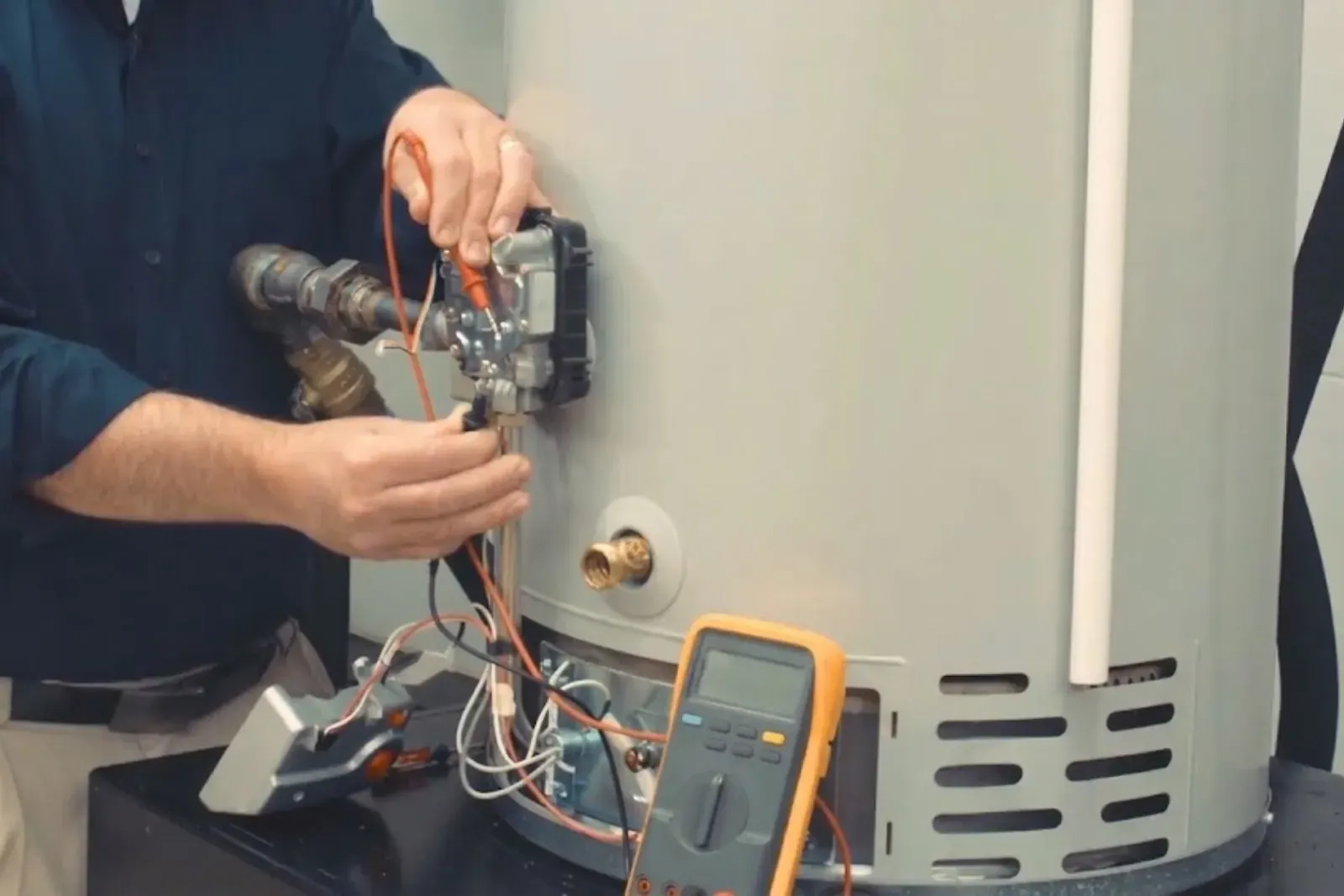
Electric heaters have two thermostats and two elements, and each can fail on its own. We test with a meter instead of swapping parts at random. The anode rod is a magnesium or aluminum bar inside the tank that corrodes first, so the steel does not. When it is consumed, the tank starts to rust, so replacing a spent anode can add years if done before the tank is pitted.
No hot water tonight?
Call now and a licensed plumber will talk through your heater type.
The Relief Valve On Top Is Not A Decoration
Massachusetts plumbing code, 248 CMR 10.14, calls for a properly sized temperature and pressure relief valve within 12 inches of the top of a vertical tank. The discharge pipe must be full size, with no shut-off valve and no cap, and it must end at a fixture or within 12 inches of the floor. A valve that drips often or discharges steadily signals either high pressure from thermal expansion or a tank that is overheating.
Never plug a dripping relief valve. We test it, check the incoming water pressure and look at whether a closed system has no place for expanding water to go. In that case, a thermal expansion tank is part of the repair, and we cover it in our water heater installation guidance.
Hard Water Scale And Sediment In Danvers Tanks
The Town's water report notes that white scaling or hard deposits on faucets and shower heads may come from calcium carbonate. Inside a tank, the same minerals settle as a crust on the bottom or on electric elements, which makes the heater louder, slower and less efficient. The Town does not publish a hardness number, so test your tap or ask the Water Division for its annual water quality report.
A yearly flush of a healthy tank removes loose sediment. If the drain valve is clogged solid or the tank is more than a decade old, flushing can start leaks, so we look before we recommend it.
When Repair Stops Making Sense
A cheap part on a young tank is a good repair. A part on a tank with a rusted base, a wet pan or an old failed anode is money spent on a heater that is about to leak. A leak from the tank body cannot be patched, and we say so on the first visit.
- The tank itself is leaking, not a fitting
- Rust-colored water comes only from the hot side
- A repair costs a large share of a new unit
- The heater is well past its usual service life
- The same failure has happened more than once in a year
In those cases, we move to water heater replacement and walk you through sizing and fuel options. If you are considering a different type, our tankless water heater page explains the trade-offs.
What Drives The Price
A thermocouple costs very little compared to a new tank, and an element swap sits in between. A firm price comes before any work begins.
Many homeowners policies cover sudden leak damage but not the heater itself or wear and tear. Check with your insurer.
Want a firm number before we start? Call (855) 575-2890
Water heater leaks near a basement drain or sump pit may point to a wider moisture issue, so see our leak detection page if the floor stays damp after the tank is dry.
Water Heater Repair Questions
Yes. The line answers 24/7, and a licensed plumber is dispatched for leaking tanks and for no-heat calls. Same-day appointments are offered when available for lower-urgency repairs.
If water is on the floor, shut off the cold supply and the power or gas before you call.
A bottom leak is often rust-through in the tank, which cannot be repaired. Check first that it is not condensation, a loose drain valve or a drip from the relief pipe.
A technician can tell the difference in minutes.
Usually one of the two heating elements has failed. The lower element does most of the work, so when it dies, you get a short supply of warm water.
A meter test confirms which element or thermostat is bad.
Sometimes, but a pilot that goes out repeatedly points to a weak thermocouple, a draft or a failing gas valve. Relighting without finding the cause only delays the repair.
If you smell gas at any point, leave the house first.
It can be. The valve is the last safety device if temperature or pressure climbs. A drip may mean thermal expansion, high supply pressure or an overheating tank.
Do not cap or plug it. Call us so we can test it.
If the leak is from the tank body, replace it. If a single part has failed on a tank in decent condition, repair is usually the better choice.
We give you the honest comparison on the first visit.
Under the Massachusetts rule, plumbing work may not be installed, altered, removed, replaced or repaired until a permit is issued, and permits go only to licensed plumbers. Ask us whether your specific repair needs one.
We handle that step for any job that does.