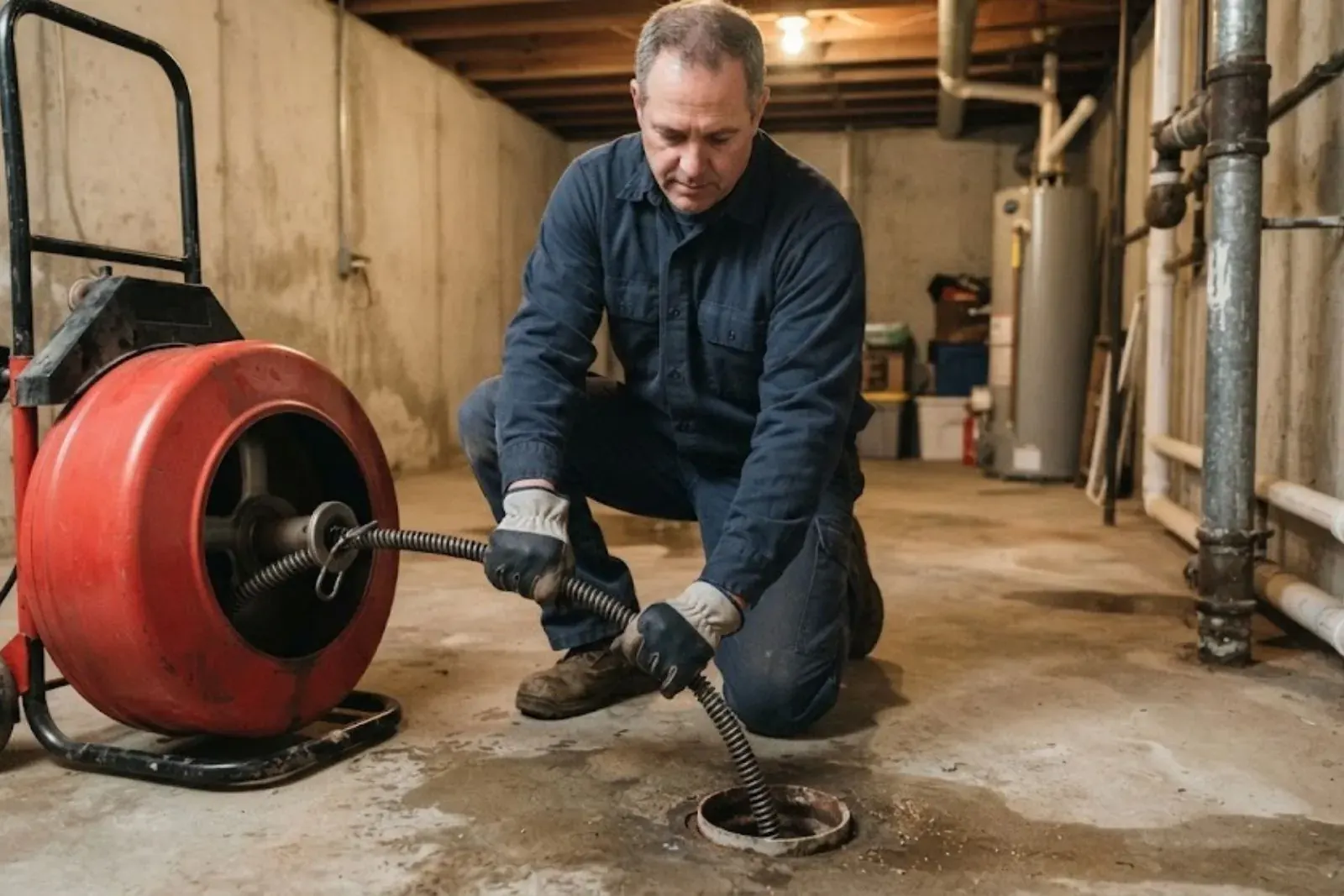
Standing Water And Gurgling: Treat It As Urgent
Water that will not leave a fixture is the sign most people ignore for a day too long. A slow sink is a nuisance, but a tub that fills when the washer drains means the blockage sits in a shared line, and the next surge of water has nowhere to go but the lowest opening in the house.
Call at once if sewage smells appear, if more than one fixture is affected, or if a basement floor drain is bubbling. Those point to the main line, not a single trap. We dispatch day and night, and after-hours calls get the same licensed plumber and the same firm price before work begins.
Two fixtures, one problem
Upstairs bath slows down and the kitchen sink gurgles at the same time. The blockage is past the point where those branches join.
Laundry backs up
Wash water rising in the standpipe or a floor drain tells you the main or laundry branch is partly closed.
Toilet and tub react to each other
Flush a toilet and the tub burbles. Air is being pushed back through a line that cannot take the water.
Slow for weeks, then stopped
Grease, soap film and hair build up in layers. The last bit of space closes without warning, usually on a holiday.
What Goes Wrong In Older Danvers Plumbing
About 25 percent of Danvers homes were built in 1939 or earlier, and roughly 70 percent predate 1980. Older houses often have cast iron or clay lines that have rough interior walls, offset joints or tree roots at the joints. A cable can clear the stoppage, but if the same blockage returns, the camera tells you whether the pipe itself needs attention.
The Town maintains more than 125 miles of gravity sewer main and owns the main line sewer in the street. That means a clog in the house lateral is yours to clear, while a blockage in the public main is not. We can tell which side of the line is stopped, so you know whom to phone.
The Town also states plainly that so-called flushable wipes do not break down and do clog sewer pipes. If you use them, bag them and put them in the trash. A wipe that passed the toilet trap can catch on a root hair two houses down and build a mat of its own.
Clogged Drain And Unclogging: Finding The Real Blockage
Unclogging starts with questions. Which fixtures are slow, since when, and did anything unusual go down the drain? The pattern tells us whether we are chasing a P-trap, a branch line or the main. Then we pick a tool that matches, instead of running a long cable through every pipe in the house.
Small fixture clogs often need a hand auger or trap removal. Anything farther down needs a cable machine, and a stubborn buildup of grease or scale may call for hydro jetting. If the cable keeps hitting something solid at the same footage each time, a camera is the next step.
Under the Massachusetts permit standard, minor repairs such as clearing a blocked drain need no permit, so a simple cleaning can usually start right away.
Drain Snaking And Cabling: What The Machine Does
Snaking means feeding a rotating steel cable into the pipe until the head reaches the blockage. For a hair and soap clog, a small blade or corkscrew tip breaks it up or hooks it. For roots, we use a cutting head sized to the pipe, since a tool that is too small only drills a hole through the root mass and the line closes again in a few weeks.
Cabling cannot scrape grease off pipe walls the way water pressure can. If the line keeps filling with the same slick buildup, we will say so and quote jetting as the better fix. If a previous cable snapped off in the pipe, tell us. We carry retrieval heads for that.
| Situation | Usual method | Why it fits | Watch for |
|---|---|---|---|
| Hair and soap in a tub or sink branch | Hand auger or small cable | Hooks or breaks up the plug | Slow drain returns if film remains |
| Laundry line backing up | Cable with a spring head | Clears lint and soap buildup | Check standpipe height |
| Roots in the lateral | Cutting head, then camera | Removes root mass and shows pipe damage | Regrowth if the pipe is cracked |
| Grease coating the line | Hydro jetting | Water pressure strips the wall | Fragile or collapsed pipe |
| Repeat clog at one spot | Camera inspection | Finds offsets, sags or breaks | May lead to repair |
Drain backing up right now?
Call the 24/7 line and tell us which fixtures are affected.
Kitchen Sink Clogs Are Usually Grease
A kitchen sink that drains slowly and then stops is almost always grease, coffee grounds and food scraps that cooled inside the trap and the first run of horizontal pipe. If the dishwasher drains into the same line, dirty water can back up into the sink and sometimes the disposal. Run the disposal with cold water only when the line is clear, never to push a clog.
We open the trap, cable the branch and look at what comes out. If the clog is food waste beyond the trap, we check that the disposal outlet and dishwasher hose are not part of the problem. Kitchen branch lines are narrow, so a clean job takes a smaller cable and patience, not force.
When A Drain Line Is Leaking, Not Clogged
A drain line leak shows up differently. You may see water at a wall or ceiling below a bathroom when a fixture drains, or a damp basement floor under the stack. The leak only appears when water is flowing down, not when the supply is on.
Drain lines leak at slip joints, cracked cast iron hubs, loose trap connections and failed cleanout caps. Many fixes are simple, like a new washer or a short section of replacement pipe. If the damage is buried under the slab or in the yard, we will say so after a camera run and explain options, including sewer line repair.
Baking Soda And Chemical Cleaners: An Honest Word
Baking soda and vinegar will freshen a trap and little else. They cannot dissolve a hairball or a mat of grease further down, and the fizz is gone in seconds. Boiling water is also a poor idea on old plastic traps or a pipe that is already loosened at a joint.
Store-bought chemical drain openers can work on a light clog in a clean modern pipe. They also sit in a blocked line, turning your trap into a puddle of caustic liquid that can burn a plumber and eat at old fittings. If one has already gone down, tell us before we start so we can wear the right gear.
While you wait for the plumber
A few minutes of care can save a floor.
- Stop using sinks, tubs, showers and the washer
- Do not flush toilets if the lowest drains are bubbling
- Shut off power to a flooded basement outlet only if you can reach the panel dry
- Move boxes and rugs off wet floors
- Do not pour more chemical cleaner into a standing blockage
If sewage is rising, keep children and pets out of the area.
What Drives The Price
A cable job on a single sink branch costs far less than a camera and jetting visit on a main line. We give you a firm number before work starts.
Homeowners policies often cover sudden water damage but rarely cover the cost of clearing a clog itself. Ask your insurer before you file.
Want a firm number for your drain? Call (855) 575-2890
Do You Need A Permit To Clear A Drain?
Under the Massachusetts plumbing rules, minor repairs such as clearing a blocked drain do not need a permit. Replacing a pipe or relocating a fixture is another matter, and permits go only to licensed plumbers. We handle any permit that a repair uncovers, and we explain the step before you agree to it.
If you also have a sump pump or a floor drain tied to the same low spot, mention it. The Town does not allow sump pumps or roof downspouts to connect to the building sewer, and a connection like that can overload the same line we just cleared.
Drain Cleaning Questions From Danvers Homes
Yes. The line answers 24/7, including holidays, and a licensed plumber is dispatched for backups, overflowing fixtures and sewage in the basement. Same-day appointments are offered when available for slower clogs.
Tell the dispatcher which fixtures are affected, since that decides which tools go on the truck.
If only one fixture is affected, the blockage is almost certainly in your branch. If every drain is slow or the floor drain gurgles, it is in the main or lateral.
The Town owns the main line sewer in the street. We can run a camera to show which side is stopped before you call anyone else.
Repeat clogs usually mean something in the pipe is catching debris: a root intrusion, an offset joint, a sag that holds water or leftover grease on the wall. A camera pass finds it.
Clearing without checking only buys time, so we recommend a look inside when a clog returns.
Baking soda helps with odors only. Chemical openers may work on a mild clog but can leave caustic liquid sitting in a blocked pipe. If you used one, tell the plumber before they start.
A cable or jetting pass is more reliable for anything that has stopped completely.
No. The Town says these wipes do not break down and do clog sewer pipes. Put wipes in the trash, even if the package says otherwise.
They are a common cause of main line backups in older Danvers neighborhoods with rough clay or cast iron.
A clog backs water up and out of a fixture or floor drain. A leak shows water outside the pipe, often only when something drains.
If a stain grows after you run the tub or washer, a drain line leak is likely and we will check the joints and the stack.
Yes. We cable the line past the disposal and trap, then check the outlet and dishwasher hose. See our garbage disposal page if the unit itself is jammed or leaking.