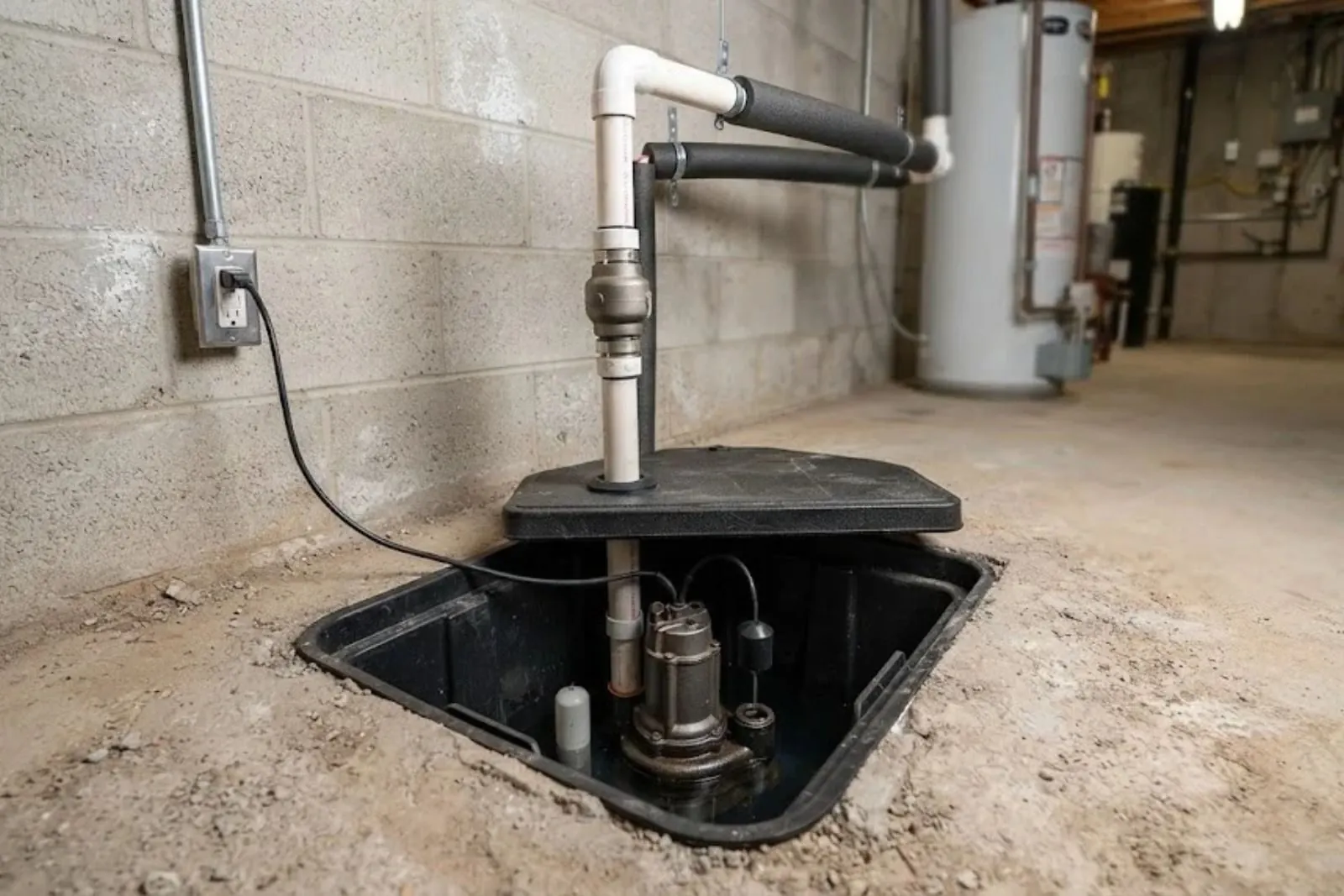
Pump Quit During a Storm: Triage Before We Arrive
While water is rising in the basement
Safety comes before the pump. Water and electricity together are the real hazard in a flooded basement.
- Do not step into standing water if the basement outlets or panel are low and wet.
- Check that the pump is plugged in and that the GFCI outlet or breaker has not tripped.
- Look at the discharge pipe outside and clear any ice, leaves or a crushed section.
- Lift the float by hand. If the pump starts, the float switch is the likely failure.
- Move valuables and stored boxes onto shelves or bins above the floor.
If the pump hums but moves no water, the impeller may be jammed or the check valve stuck. If it makes no sound at all, the motor or power supply has failed. Tell the dispatcher which one you hear, since it changes what the plumber loads onto the truck.
The Danvers sewer regulations prohibit connecting a sump pump to the town sewer with no grandfathering, a standard every discharge line has to meet.
Why Danvers Basements Get Wet
The town has a documented flooding history. In the Mother's Day Flood of May 2006, the four-foot barriers at the Danvers Electric station were breached. The town reports flooding near Town Center and along the Porter River, Beaver Brook, Crane River and Waters River, and its 2019 Hazard Mitigation Plan rates flooding high frequency and serious severity. A basement near those waterways deserves a working pump and a backup.
Beaver Brook and the Crane River area sit in a FEMA zone AE flood hazard area. If your property is near either, ask the town whether it is mapped, because a high water table means the pump runs often and wears out sooner. The same is true across the line in Middleton, where Ipswich River flooding stresses sump pumps and septic fields together.
A Rule Every Danvers Owner Should Know
The Town prohibits connecting sump pumps to the town sewer, with no grandfathering. Roof downspouts, exterior foundation drains and area drains may not connect to the building sewer either, under Sewer Regulations Section III. Stormwater and groundwater do not belong in the sanitary sewer.
The practical effect: the pump must discharge outdoors, away from the foundation, and not into a floor drain, a laundry sink or a pipe that ties to the sewer. If a past owner piped it that way, a plumber can reroute it. This also protects you, because a flooded sewer system can push water back into a basement with a connection like that.
Repair or Replace: A Decision Table
| What you see | Likely cause | Typical fix | Repair or replace |
|---|---|---|---|
| Pump never starts | Dead motor, tripped GFCI, stuck float | Reset power, test float, replace switch or pump | Repair a switch, replace a dead motor |
| Runs but pumps little | Jammed impeller, clogged intake, bad check valve | Clean the intake, replace the check valve | Repair |
| Cycles every few minutes | Water returning down the discharge, stuck check valve | Install or replace the check valve | Repair |
| Loud grinding or rattling | Worn bearings, debris in the pit | Clear the pit, replace the pump if bearings are worn | Replace if old |
| Pump older than its useful life | Wear, rust, weak motor | Swap before the next big storm | Replace |
Most pumps wear out gradually, not suddenly, and a unit that has run through many spring seasons is a candidate for replacement even if it still works. A failed pump on the first night of a nor'easter is the expensive way to learn that.
Floats, Backup Power and Alarms
The float switch is the pump's brain, and it is the part that fails most often. A tethered float can snag on the pit wall, a vertical float can stick against a pipe, and either one leaves a healthy motor idle. A pit that is too narrow makes this worse, which is why we check the pit size and the float travel on every visit.
Storms often cut power, which is exactly when the pump is needed. A battery backup system adds a second pump, a deep cycle battery and a charger that takes over when the main pump or the electricity fails. A water level alarm gives you warning before the pit overflows. Together they turn a bad night into a manageable one.
Pit full and pump silent?
Call now. Our line answers all night for sump pump failures in Danvers.
Installing a Sump Pump in an Indoor Pit
A new installation starts with the pit. A plumber cuts the slab, digs a basin, sets a liner, installs the pump on a stable base, and runs a discharge line with a check valve to the exterior. Cutting a floor makes dust and noise, and a licensed plumber pulls any permit that the work needs.
Locate the low point
We look for where water enters and where the slab slopes, since the pit goes where water naturally gathers.
Cut and dig
The slab is saw cut, the soil removed and a basin set level so the float swings free.
Set the pump and discharge
The pump sits on a firm base, a check valve goes on the discharge, and the pipe is routed outdoors, never to the sewer.
Test under load
We fill the pit, watch the float cycle, check the check valve and confirm the discharge point is clear.
A pump that runs nonstop after a dry week can also point to a hidden supply leak, which leak detection can rule in or out. If your basement has damp walls or seepage that a pump alone cannot solve, see our page on basement waterproofing. For flooding that comes up through floor drains, the issue is the sewer, and a sewer line repair inspection is the next step.
What Drives The Price Of Sump Pump Work
A replacement swap costs far less than cutting a new pit. We confirm the scope on site and give the price before work starts.
Most homeowner policies exclude groundwater and sump failure unless you added a water backup endorsement. Ask before the storm, not after.
Want a firm number for your basement? Call (855) 575-2890
Keeping the Pump Ready Year Round
- Pour a bucket of water into the pit each spring and watch the pump start and stop.
- Clean debris from the pit and the pump intake once a year.
- Test the battery backup twice a year and replace the battery on schedule.
- Check the outdoor discharge end so it points away from the foundation and is not buried or frozen.
Sump Pump Questions Answered
Yes. We staff the line 24/7, including storm nights. Tell the dispatcher whether the pump is silent, humming or running without moving water, and we send a licensed plumber the same day when available.
No. The Town of Danvers prohibits it, with no grandfathering. Downspouts and exterior foundation drains may not connect to the building sewer either. The pump must discharge outdoors.
Lift the float by hand with the pump plugged into a working outlet. If the pump starts, the float was stuck or failed. If it does not start, the motor or power supply is the issue.
If your basement floods during storms or you have lost power in past storms, yes. The 2006 Mother's Day Flood and the town's flood history show wet basements are a real risk in Danvers.
It varies with how often it runs, the pump quality and the water. A pump that cycles constantly wears faster. Replace it before it fails if it is old, noisy or slow.
A high water table after snowmelt, a stuck check valve letting discharge water flow back, or a leaking supply pipe can all do it. We check which one.
No. A pump removes water that has reached the pit. Waterproofing tries to keep water out, and some of that is exterior work done by other trades.