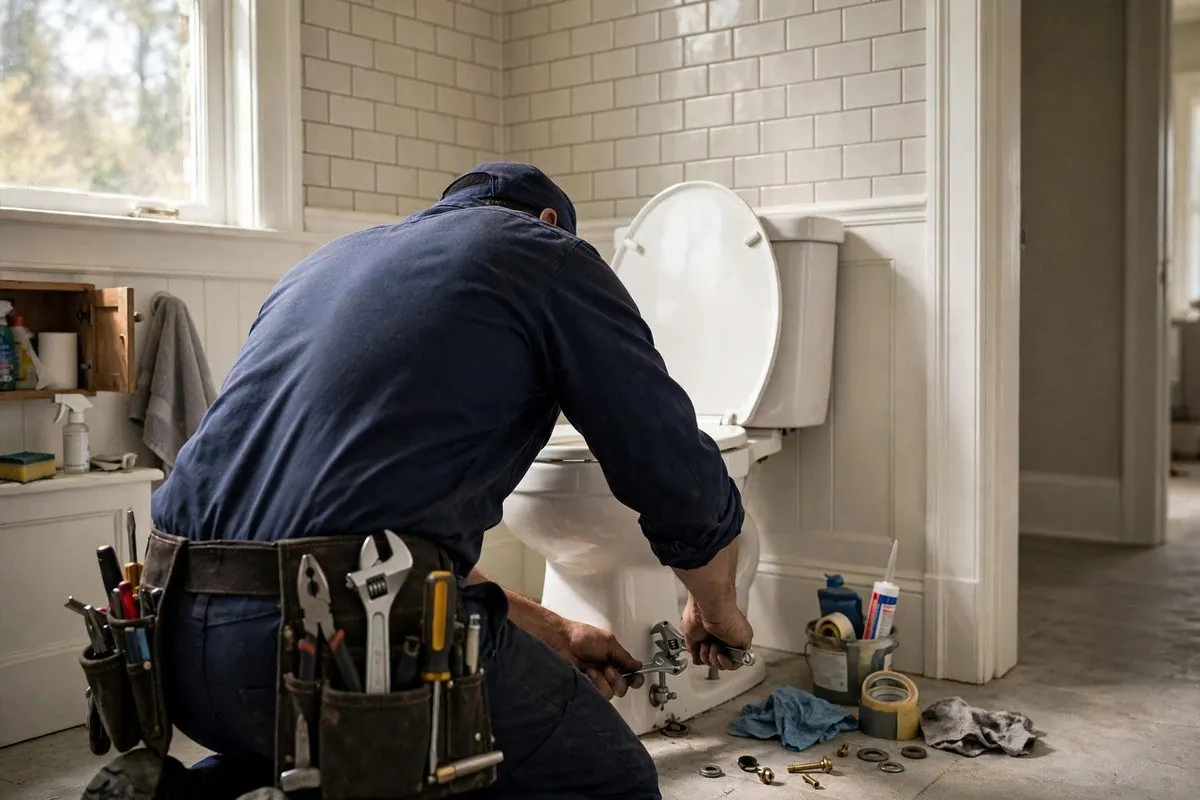
Buy The Right Toilet Before You Start
Measure the rough-in, which is the distance from the finished wall to the center of the floor drain bolts. Twelve inches is the common figure, but ten and fourteen exist. A toilet built for twelve will not fit a ten-inch rough-in.
Check the bowl shape, round or elongated, and the height. Elongated bowls need about two inches more clearance in front. Choose a model with a quiet, fast-closing seat only if you like one, because the real decision is flush performance.
Tools And Parts Checklist
- New toilet with tank bolts and a seat
- Wax ring, or a wax-free seal, plus new closet bolts
- Adjustable wrench, putty knife and a flat-head screwdriver
- Braided stainless supply line, since the old one rarely survives
- Sponge, bucket, rags and disposable gloves
- Shims for a floor that is slightly out of level
- Plumber's tape and a small level
Removing The Old Toilet
Shut off and drain
Close the stop valve behind the toilet, flush and hold the handle, then sponge the last water from tank and bowl.
Disconnect the supply
Loosen the supply line nut with a wrench and have a bucket handy for what drains out.
Unbolt and rock free
Remove the caps and nuts on the floor bolts, then rock the toilet gently to break the wax seal. Lift with a partner, because a toilet is heavier than it looks.
Scrape and cover
Scrape the old wax from the flange and stuff a rag in the pipe to block sewer gas while you work.
Check The Flange Before Anything Goes Back
The flange is the ring on the floor that the toilet bolts to. It should sit on top of the finished floor, level and solid, with no cracks. A flange recessed below the floor can leave the wax ring unable to seal, and that shows up as a slow leak and a rocking toilet.
| What you see | Why it matters | Common fix | DIY or plumber? |
|---|---|---|---|
| Flange sits below the floor surface | Wax seal does not compress | Add a flange extender or a thicker ring | DIY with care |
| Cracked plastic or rusted cast iron | Bolts will not hold | Repair ring or replacement flange | Plumber for cast iron |
| Soft or rotted floor around it | Toilet will rock and leak | Subfloor repair | Plumber |
| Flange not bolted to the subfloor | Moves when the toilet is set | Secure with proper screws | DIY or plumber |
| Corroded closet bolt slot | Cannot hold new bolts | New flange or repair plate | Plumber |
Danvers Houses And Toilet Swaps
About 25.4 percent of Danvers homes date to 1939 or earlier, based on Census ACS 2020 to 2024 data. Cast iron or older brass flanges, rusted closet bolts and soft subfloors are more likely in those houses, so expect surprises when you lift the old toilet.
The Town's own water report notes that white scale on faucets may come from calcium carbonate. Scale can freeze a stop valve in place, so turn it a quarter turn before the project day to see if it still closes.
Massachusetts counts clearing a blocked drain or fixing a leaky faucet as minor, and replacing a faucet is not. It does not spell out toilets, so check with the inspections office on Sylvan Street before you buy parts. Only licensed plumbers can obtain permits.
Source type: Census ACS 2020 to 2024, Town of Danvers water report and Massachusetts permit guidance
A Quick Word On Wax Rings
A standard wax ring works for most floors. A thicker or flanged ring helps when the flange sits slightly low, while a wax-free seal can be reused if you must lift the toilet again. Whichever you pick, place it once and keep the toilet from shifting.
Setting The New Toilet
Install new bolts and the seal
Slide new closet bolts into the flange slots, then place the wax ring on the flange or on the horn of the new toilet.
Lower straight down
Align the bowl over the bolts and press it down evenly. Do not rock the toilet after it touches the wax.
Snug the nuts evenly
Tighten each side a little at a time. Overtightening cracks the porcelain, so stop at snug and level.
Attach the tank and supply
Bolt the tank to the bowl with the rubber gasket, connect the new supply line, open the stop valve and check every joint for drips.
When To Stop And Call
Call a plumber if you see these
- The flange is cracked, rusted through or loose from the floor.
- The floor around the toilet is soft.
- The stop valve will not close or leaks when turned.
- Water leaks at the base after you have seated the toilet and tightened the nuts.
- A new toilet clogs on the first day, which can point to a vent or drain problem.
Our toilet repair team fixes rocking, leaking and running toilets, and for a new fixture with a relocated drain our plumbing installation service handles the layout.
Neighboring Towns, Same Process
The steps above work in Beverly and Topsfield just as they do in Danvers. Topsfield town water has iron and manganese that can stain a bowl, so ask the water department about its report before you blame the toilet.
Toilet Replacement FAQ
Plan on about two hours for a straightforward swap, longer if the flange or floor needs work.
Yes. A used ring will not reseal. Any time the toilet is lifted, use a new ring or a fresh wax-free seal.
Snug. Tighten each nut alternately and stop when the toilet no longer rocks, because porcelain cracks under force.
The floor may be uneven or the flange may sit too high or low. Shims under the base fix a slight tilt, but a loose flange needs repair.
The state treats minor repairs differently from replacements, and no Danvers page lists toilets. Check with the town inspections office first, and remember that permits go only to licensed plumbers.
Most trash haulers will not take a whole fixture. Ask your trash hauler about bulk item rules before the old toilet comes out, and consider breaking it up only with eye protection.